

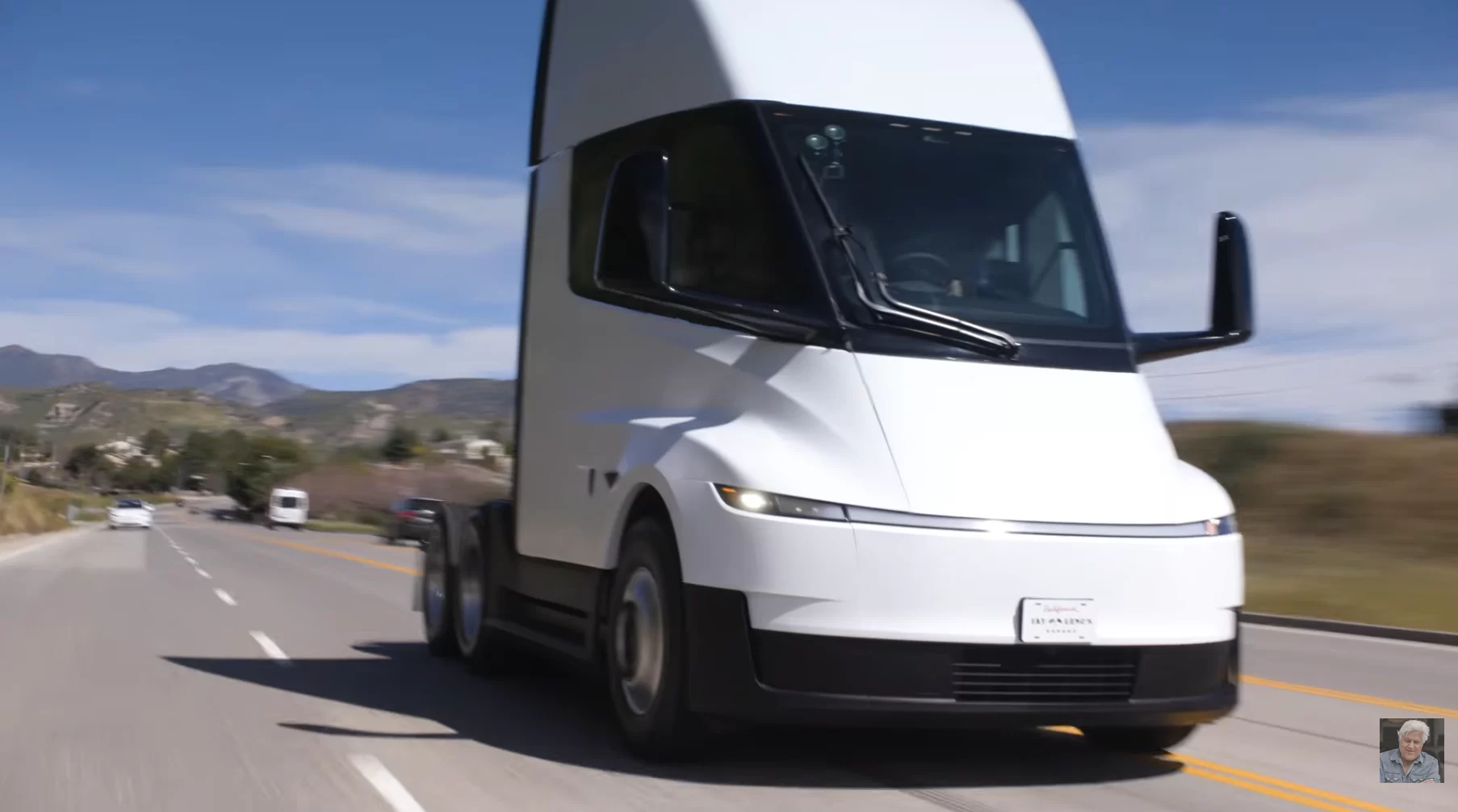
In a recent Jay Leno’s Garage episode, Jay Leno reviewed the Tesla Semi alongside Tesla’s design and engineering leaders. The discussion focused on the truck’s aerodynamics, cost savings, safety features, charging speed, and driver comfort. According to Tesla’s engineers in the interview, the Semi is designed to reduce operating costs, improve driver experience, and potentially make trucking safer through improved visibility, stability, and automation technology.
The Tesla Semi is offered in two primary configurations: a long-range version with approximately 500 miles of range and a shorter-range version designed for regional routes. Tesla claims the truck can recover about 60% of its range in approximately 30 minutes using high-power charging.
While the technology appears impressive, it is important to evaluate Tesla’s claims carefully, especially from a safety and trucking industry perspective.
Tesla Semi Design Claims: Aerodynamics, Center Driver Seat, and Electric Power
During the interview, Tesla engineers explained that the Semi uses a center driver seating position and a narrow cab design to improve aerodynamics and visibility. They also emphasized that electric motors provide instant torque, smoother driving, and fewer mechanical parts than diesel trucks.
Tesla also stated that electric trucks may require less maintenance because they do not require oil changes, transmissions, or traditional engine components that wear out in diesel trucks. The engineers claimed the battery is designed to last up to one million miles, though long-term real-world data is still limited because the truck is relatively new.
Tesla Claims the Semi Is Cheaper to Operate Than Diesel Trucks
One of the biggest claims made in the interview was cost savings. Tesla stated that the Semi is approximately:
- 50% cheaper to operate per mile in California (where gas is the most expensive in the US)
- About 20% cheaper per mile across the United States
These savings were attributed to:
- Lower electricity cost compared to diesel fuel
- Reduced maintenance
- Regenerative braking reducing brake wear
- Fewer mechanical components
However, these cost savings depend heavily on charging infrastructure, electricity pricing, route type, and fleet operations. Long-haul routes without reliable charging infrastructure may reduce these savings significantly.
Safety Considerations for Electric Semi Trucks
From a truck accident and safety perspective, the Tesla Semi introduces several new considerations. According to Tesla’s engineers in the interview, the truck includes:
- Improved visibility due to center seating
- Electronic braking systems
- Regenerative braking for downhill control
- Multiple cameras and sensors
- Potential future autonomous driving features
- Air suspension and stability improvements
They also noted that heavy trucks currently have fewer safety regulations than passenger vehicles, and Tesla stated their goal is to make the Semi one of the safest trucks on the road.
However, electric trucks also introduce new safety questions, including:
- Battery fire risks after crashes
- High-voltage electrical systems
- Silent operation (pedestrian risk)
- Emergency response procedures for electric trucks
- Charging infrastructure and roadside breakdown issues
These issues will likely become important in future truck accident investigations and litigation.
Why Electric Semi Trucks Might Be Better Than Diesel Trucks
Electric semi trucks may offer several advantages over traditional diesel trucks, particularly in operating cost, maintenance, and potentially safety. Because electric trucks run on electricity rather than diesel fuel, fleets in many regions may see lower energy costs per mile, especially where electricity prices are stable or where companies can generate power through solar or other on-site energy systems. Potential advantages of electric semi trucks include:
- Lower fuel/energy cost per mile in many regions
- Less routine maintenance
- No oil changes or engine maintenance
- Regenerative braking reduces brake wear
- Instant torque improves acceleration and merging
- Quieter operation reduces driver fatigue
- Lower center of gravity improves stability
- Ability to power refrigerated trailers electrically
- Reduced dependence on diesel fuel prices
- Potential future autonomous safety features
- Smoother driving experience
- Improved driver visibility from center seating position
These advantages could reduce certain types of truck accidents, especially those related to brake failure, driver fatigue, and poor visibility.
Concerns and Unknowns About Electric Semi Trucks
While electric semi trucks offer promising benefits in efficiency, maintenance, and potentially safety, they also introduce a new set of risks, uncertainties, and operational challenges that fleets, regulators, insurers, and truck accident attorneys should carefully consider. Unlike diesel trucks, electric heavy trucks rely on large battery systems, specialized charging infrastructure, and new drivetrain technologies that have not yet been tested over decades of real-world use across all climates and operating conditions.
As a result, there are still important questions about long-term reliability, crash response, fire risk, towing and recovery procedures, and how autonomous driving technology may affect liability in truck accident cases. Before electric semi trucks become widespread across the trucking industry, these concerns and unknowns will need to be addressed through real-world experience, regulation, and continued technological development.
Top Concerns About Electric Semis:
- Charging infrastructure is still limited in many areas
- Battery replacement cost may be very high
- Cold weather can reduce range
- Long charging times compared to refueling diesel
- Electric truck fires may be difficult to extinguish
- Limited long-term reliability data
- Higher upfront purchase price
- Towing and recovery after crashes may be more complicated
- Weight differences may affect crash severity
- Autonomous driving features raise liability questions
As electric big rigs become more common, these issues will likely become important factors in truck accident cases.
The Future of Electric Semi Trucks
The Tesla Semi represents a major shift in the trucking industry. If Tesla’s claims about operating cost, reliability, and safety prove true at scale, electric semi trucks could significantly change the trucking industry over the next decade.
However, like all new transportation technology, electric semi trucks will introduce new safety issues, new regulations, and new legal questions related to truck accidents, product liability, autonomous driving systems, and battery fires.
For now, the Tesla Semi appears promising—but the trucking industry, regulators, insurers, and truck accident attorneys will be watching closely as more of these trucks hit the road.
FAQ – Tesla Semi Truck
How far can the Tesla Semi travel on one charge?
The long-range Tesla Semi is designed for approximately 500 miles per charge, while a shorter-range version is designed for regional routes.
How long does it take to charge a Tesla Semi?
Tesla claims the Semi can recover about 60% of its range in approximately 30 minutes using high-power charging.
Is the Tesla Semi cheaper to operate than diesel trucks?
Tesla claims the Semi may be cheaper per mile due to lower energy costs and reduced maintenance, but actual savings depend on electricity prices, routes, and charging infrastructure.
Are electric semi trucks safer than diesel trucks?
Electric trucks may have safety advantages like better visibility, stability, and braking systems, but they also introduce new risks such as battery fires and high-voltage systems.
Will electric semi trucks replace diesel trucks?
Electric trucks will likely be used first for regional and fleet operations, but diesel trucks will probably remain common for long-haul trucking for many years.
Photo credit: Screenshot from “Jay Leno Drives the 500-Mile Tesla Semi: The Death of Diesel? | Jay Leno’s Garage” https://www.youtube.com/watch?v=BCXSq1dmEB8


