Who’s Liable in a Bus Accident?
Why Bus Accidents Can Be Catastrophic
The Real Consequences of a Bus Collision
Leading Causes Behind Bus Collisions
What Commonly Causes Bus Accidents?
Driver Fatigue & Negligence
Bus drivers must follow federal safety regulations, including limits on consecutive driving hours. Fatigue, distraction, speeding, or substance use can all cause accidents. Accident reconstruction, driver logs, and witness statements help determine if driver error played a role.
- Common Issues: Drivers exceed daily driving limits, skip breaks, or operate while drowsy.
- Why It Matters: A tired driver reacts more slowly, increasing the risk of serious collisions.
- Example: A driver nodding off at a busy intersection causes a side-impact crash with another vehicle.
Reckless or Distracted Driving
Drivers may engage in aggressive maneuvers, use phones, or ignore traffic laws. Police reports and video evidence often show whether these actions contributed to the crash.
- Common Issues: Using a phone, aggressive lane changes, or ignoring traffic signals.
- Why It Matters: Even minor lapses in attention can lead to catastrophic crashes when operating a large vehicle.
- Example: A driver texting while navigating a curve loses control and strikes a roadside barrier.
Vehicle Maintenance Issues
Poorly maintained buses can fail unexpectedly. Brake or engine malfunctions are investigated through repair logs and maintenance records to establish responsibility.
- Common Issues: Brakes, tires, or steering components not serviced on schedule.
- Why It Matters: Mechanical failures can prevent the bus from stopping or maneuvering safely.
- Example: A bus experiences brake failure on a downhill road, colliding with a car at a stoplight.
Environmental & Weather Conditions
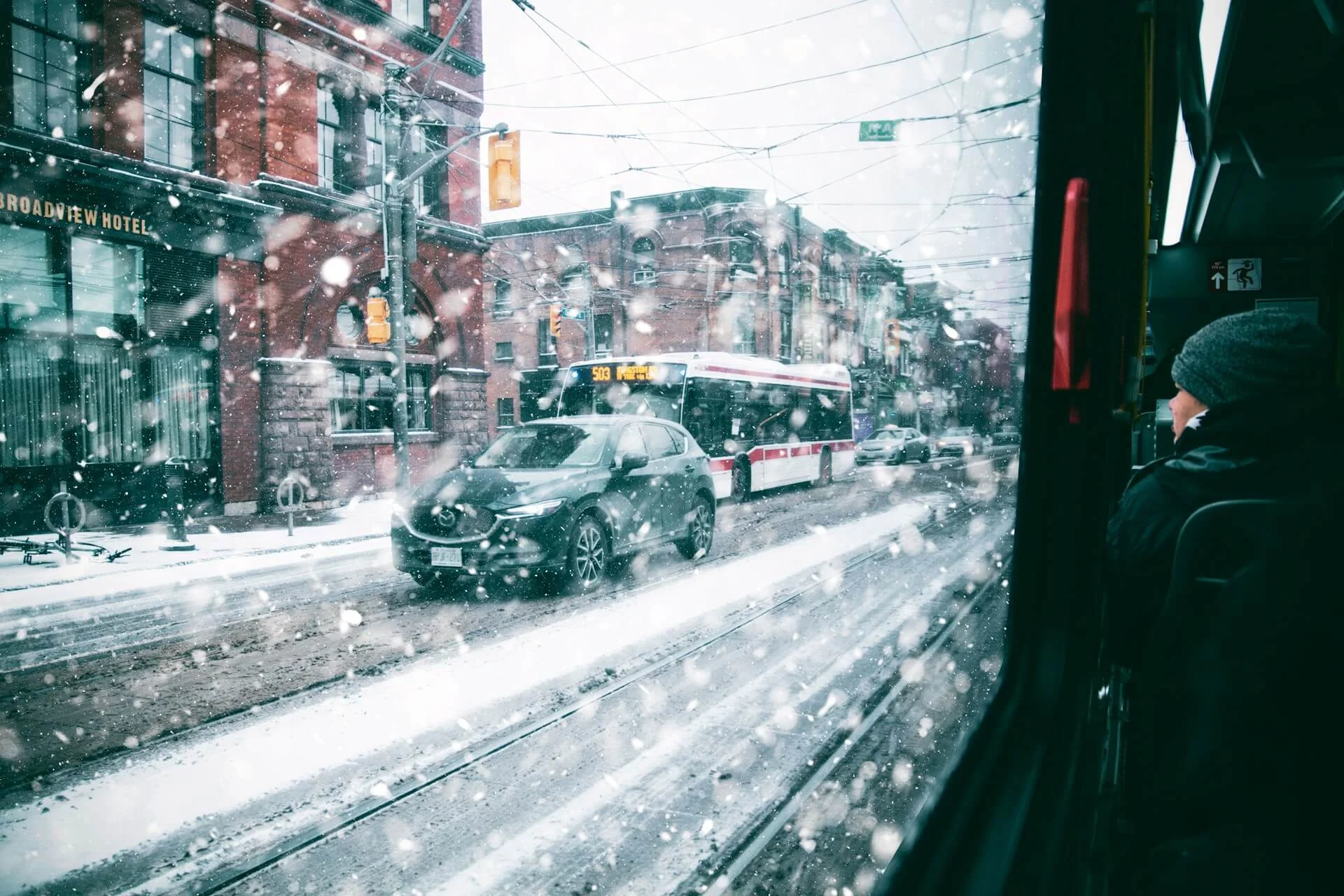
Rain, snow, or low visibility can contribute to collisions, especially if drivers fail to adjust their behavior. Meteorological reports and eyewitness accounts help clarify impact.
- Common Issues: Rain, ice, snow, fog, or poor visibility combined with improper driving adjustments.
- Why It Matters: Drivers must adjust speed and behavior; failure to do so can cause rollovers or rear-end collisions.
- Example: A bus skids on an icy highway because the driver didn’t reduce speed in heavy snow.
Overloading & Passenger Mismanagement
Excess passengers or unsecured items can affect bus handling. Reports and photos from the scene often reveal whether overloading played a role.
- Common Issues: Excess passengers, unsecured luggage, or failure to monitor seating.
- Why It Matters: Extra weight or unbalanced loads can affect handling and braking performance.
- Example: A crowded tour bus tips over on a sharp curve because weight distribution was not properly managed.
Third-Party Drivers
Other motorists may share liability if they cut off or collide with the bus. Police reports, dashcam footage, and witness testimony help determine their responsibility.
- Common Issues: Other motorists cutting off or colliding with the bus.
- Why It Matters: External negligence can trigger serious crashes, even if the bus driver is careful.
- Example: Another car runs a red light and collides with a school bus, injuring multiple passengers.
Determining Liability in a Bus Accident
Who Can Be Held Legally Responsible?
The Bus
Driver
The Bus Operator / Company
Public or Government
Entities
Bus & Parts
Manufacturers
Recoverable Damages
Bus Accident Compensation for Victims
Victims of bus accidents may be entitled to compensation for:
- Medical expenses and rehabilitation costs
- Lost wages and economic losses
- Property damage
- Wrongful death
Most states allow claims against multiple parties if responsibility is shared. Experienced attorneys can help ensure the settlement reflects the true impact of the accident.
Higher Settlements
With Attorney Representation
Insurance Payouts
Go to Represented Clients
Get the Representation You Deserve
Connect with an elite truck accident attorney today.