

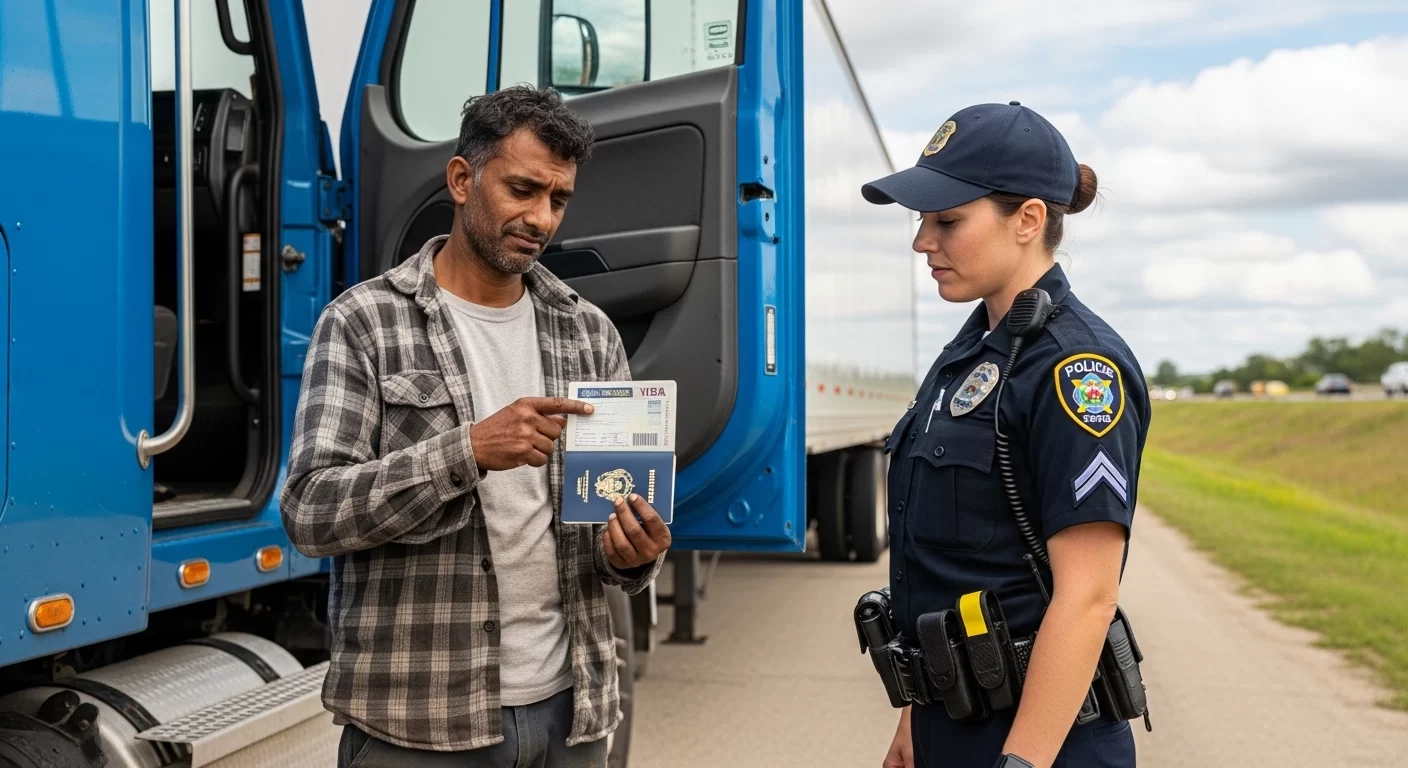
A sweeping federal crackdown on commercial driver’s licenses issued to non-citizens has thrown the U.S. trucking industry into turmoil, abruptly ending the careers of thousands of immigrant drivers and igniting a broader political fight over immigration enforcement, labor shortages, and federal–state authority.
The controversy escalated after federal pressure led California officials to cancel thousands of commercial driver’s licenses held by immigrant truckers. For many drivers, the cancellations arrived suddenly, with little warning and few options for appeal. Overnight, workers who had built their livelihoods hauling freight across the country found themselves unemployed and unable to legally operate the trucks they depended on for income.
A Federal Crackdown on Non-Citizen Truck Drivers
The policy stems from a broader effort by the Trump administration to tighten eligibility for commercial driver’s licenses (CDLs) nationwide. Federal transportation regulators have argued that states improperly issued CDLs to some non-citizens whose immigration status did not qualify them under federal law. In response, the Department of Transportation began pressuring states—including California—to halt issuance of certain licenses and revoke others that had already been granted.
The crackdown reflects a broader ideological shift within federal immigration policy. Supporters in the administration frame the initiative as a public-safety measure. Officials cite several high-profile truck accidents like in Ontario, California involving drivers who were allegedly not authorized to work in the United States, arguing that stricter vetting is necessary to prevent tragedies on American highways.
But critics say the move is less about safety and more about politics. Immigration enforcement has long been a defining issue in Trump-era politics, and the trucking policy represents a new front in that debate—one that directly intersects with the American labor market.
Thousands of Licenses Revoked
The scale of the cancellations is substantial. California alone has moved to revoke tens of thousands of commercial licenses issued to immigrant drivers after discovering mismatches between license expiration dates and immigration records.
In some cases, the discrepancies stemmed from bureaucratic errors. State officials later acknowledged that their systems had not properly updated federal work-permit extensions, meaning some drivers who were legally authorized to work were mistakenly flagged as ineligible.
Nevertheless, the cancellations proceeded, leaving drivers caught between federal policy demands and state administrative failures.
For immigrant truckers—many of whom have worked in the industry for years—the consequences are immediate and severe. Losing a CDL effectively eliminates their ability to earn a living in the profession.
Economic Shock to the Trucking Industry
The crackdown arrives at a time when the U.S. trucking industry already faces persistent driver shortages. Immigrants have become a critical part of the trucking workforce, especially in states like California where international trade and port traffic drive demand for freight transportation.
Industry analysts warn that removing thousands of drivers from the labor pool could worsen supply-chain disruptions. Trucking companies rely heavily on experienced operators, and replacing them is not easy in a sector that already struggles to recruit younger workers.
Small trucking firms may be particularly vulnerable. Many immigrant drivers work for family-run carriers or independent contractors hauling freight for larger logistics companies. When licenses disappear, those small businesses lose both workers and revenue.
Federal vs. State Power
The dispute also highlights a deeper constitutional conflict between federal immigration authority and state licensing power.
States traditionally control driver licensing through their departments of motor vehicles. But the federal government regulates commercial trucking under interstate commerce rules, giving Washington significant leverage over CDL standards.
In this case, federal officials have threatened to withhold transportation funding from states that fail to comply with the new restrictions.
That threat has forced states into a difficult political position. California officials initially sought to delay revocations while they reviewed individual cases and corrected administrative errors. Federal regulators rejected that approach and insisted that the licenses be canceled immediately.
The result is a policy standoff that has turned immigrant truck drivers into what some advocates describe as “collateral damage” in a broader political conflict.
Legal Challenges Mount
Immigrant drivers and civil-rights organizations have responded with lawsuits, arguing that the sudden cancellations violate due-process rights and unfairly punish workers who relied on licenses issued by the state.
Advocacy groups representing many of the drivers—particularly Sikh and South Asian truckers who make up a large share of California’s immigrant trucking community—say the revocations could devastate families who built their lives around the profession.
Attorneys for the drivers contend that many affected workers were legally authorized to work and that the government failed to provide adequate notice or a meaningful opportunity to challenge the cancellations.
Courts have already begun reviewing the issue, and judges may ultimately determine whether the state or federal government acted unlawfully in revoking the licenses.
The Political Stakes
Beyond the legal battles, the issue underscores the broader political divide over immigration policy in the United States.
Supporters of the crackdown argue that jobs requiring federal safety credentials—such as commercial trucking—should be limited to citizens or immigrants with clear legal authorization. They frame the policy as a necessary correction to lax enforcement and inconsistent state licensing practices.
Opponents see the crackdown as another example of immigration policy driven by politics rather than practical economic considerations. They argue that removing experienced drivers from the workforce harms both immigrant families and the national supply chain.
The dispute also illustrates how immigration enforcement increasingly intersects with labor markets. In sectors ranging from agriculture to trucking, immigrant workers fill roles that many employers struggle to staff.
An Uncertain Future for Trucking
For now, thousands of truck drivers remain in limbo. Some are attempting to regain their licenses through legal appeals, while others are searching for new work outside the industry.
The outcome of pending lawsuits and federal policy decisions will determine whether they can return to the road—or whether the crackdown will permanently reshape the immigrant workforce that has become essential to America’s freight economy


