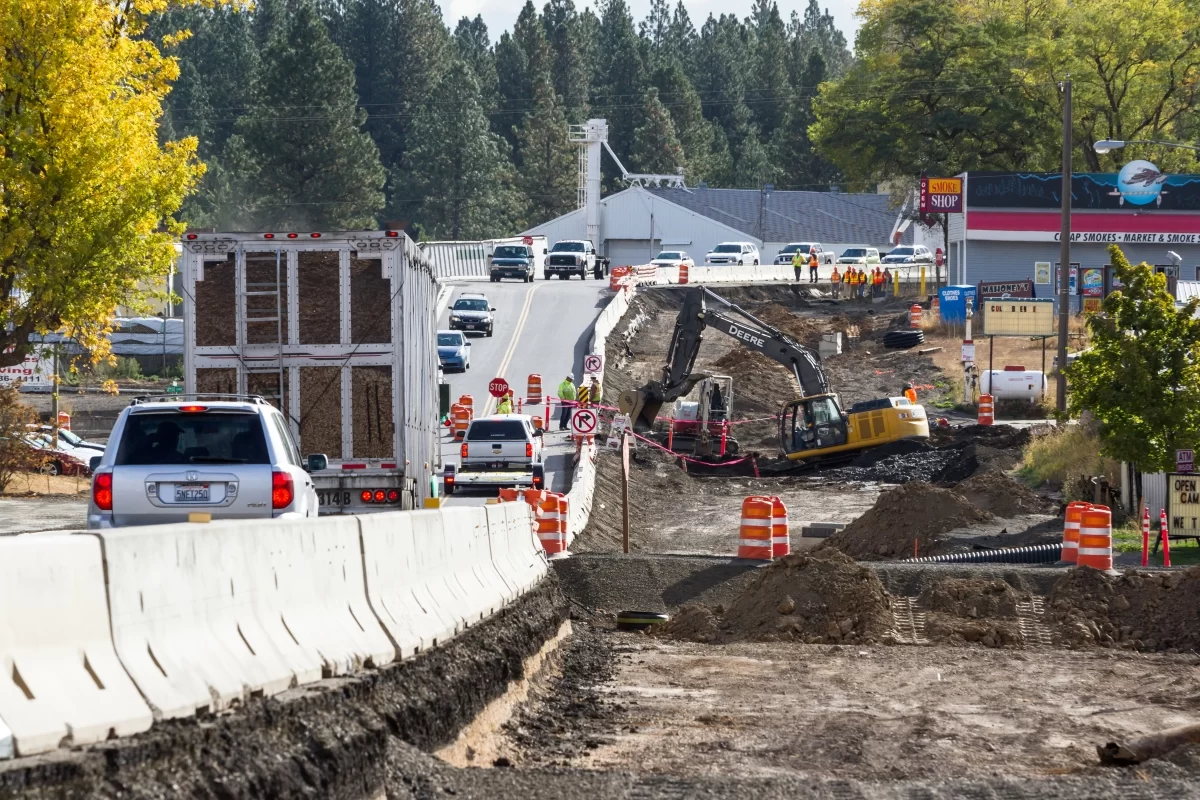
Commercial trucks today are packed with technology that tracks a lot of data. How fast the driver is going, when they hit the brakes, and even where they’re looking. All of it gets saved digitally. If a truck hits you in a work zone, these electronic records can show exactly what the driver was doing and whether they broke any rules.
Trucking companies know about this evidence, too. They also know it can be deleted, overwritten, or conveniently “malfunction” if nobody demands it fast enough.
If you were hit by a commercial truck in a construction zone, three types of electronic evidence can make or break your case: dashboard camera footage, electronic logging device (ELD) data, and cell phone records. Each one captures different proof of negligence, and each one has a ticking clock before it disappears forever.
If you’ve been injured in a work zone truck accident, contact Doubek, Pyfer & Storrar, PLLP at 406-442-7830 immediately. Their Montana trucking accident lawyers know exactly what evidence to demand, how to preserve it legally, and how to use it to hold trucking companies accountable. Every day you wait is another day critical proof can vanish.
Dashboard Cameras Show What Really Happened
Most commercial trucks now have forward-facing and driver-facing cameras. They’re installed by insurance companies and fleet managers to monitor driver behavior and reduce liability.
Dash cam footage captures the seconds before impact. It shows whether the truck driver was speeding through reduced work zone limits, following too closely, or failing to brake in time. Driver-facing cameras reveal even more. They record if the driver was looking at their phone, eating, adjusting the radio, or falling asleep at the wheel.
Work zones have posted speed limits, often 20-30 mph below normal highway speeds. Cameras timestamp everything. If a truck enters a 45 mph work zone doing 65 mph, that footage is proof of reckless driving.
However, many dash cam systems overwrite footage every 30 to 90 days unless specifically flagged for preservation. Some companies claim their cameras “weren’t working” during the crash. Others drag their feet responding to preservation requests until the footage cycles out of the system.
Your trucking crash attorney needs to send a spoliation letter immediately after the accident. This legal notice demands that the trucking company preserve all electronic evidence. Without it, crucial footage can disappear.
ELD Data Reveals Hours of Service Violations
Federal law requires commercial truck drivers to use Electronic Logging Devices. These systems automatically track driving time, rest breaks, and duty status. The goal is to prevent fatigued driving, a leading cause of truck accidents.
ELDs record when a driver starts their shift, how long they’ve been driving, and whether they’re violating hours of service rules. Truck drivers can’t legally drive more than 11 hours in a 14-hour window. They must take 10 consecutive hours off duty before starting again.
Fatigued truckers cause thousands of crashes every year. The Federal Motor Carrier Safety Administration reports that driver fatigue contributes to 13% of all large truck crashes. In work zones where reaction time matters most, a drowsy driver is a deadly driver.
ELD data doesn’t just show hours driven. It also captures:
- Vehicle speed at the time of impact
- Hard braking events before the crash
- Sudden lane departures
- Engine diagnostics and mechanical issues
This data lives on the device and in cloud backups maintained by the ELD provider. Like dash cam footage, it can be deleted or “lost” if not preserved quickly.
Cell Phone Records Prove Distracted Driving
Texting while driving is illegal for commercial truck drivers under federal regulations. Even hands-free phone use creates dangerous cognitive distractions when navigating work zones with shifting traffic patterns, narrow lanes, and construction workers on foot.
Cell phone records obtained through subpoena show the exact times a driver sent texts, made calls, or used data. When compared against crash reports and timestamps, these records prove whether a driver was on their phone at the moment of impact.
Trucking companies hate this evidence because it’s nearly impossible to dispute. Phone carriers maintain detailed logs. If the records show a text sent at 3:47 PM and the crash report lists 3:47 PM as the time of collision, it can be damning evidence to prove a distracted driver behind the wheel of a dangerous 80,000 pound machine.
Why Trucking Companies Fight Evidence Preservation
Insurance companies representing trucking firms know how damaging electronic evidence can be. Their strategy is simple: delay, deny, and hope critical data disappears before trial.
Common tactics include:
- Claiming devices malfunctioned during the crash
- Arguing that data is proprietary or protected
- Slow-walking responses to preservation demands
- Offering quick settlements before evidence review
This is why you need an attorney experienced in trucking litigation. The firm knows how to issue U.S. federal spoliation letters, file emergency motions to preserve evidence, and subpoena third-party data providers before trucking companies can interfere.
Time Is Not On Your Side. Call A Montana Truck Accident Law Firm As Soon As Possible!
Electronic evidence has expiration dates. Dash cam systems overwrite footage. ELD providers purge old data. Cell phone carriers archive records that become harder to retrieve over time.
The moment you’re well enough after a work zone truck accident, contact legal help. Not next week. Not after you “see how things go” with insurance. Immediately.
Work zone crashes are different from regular traffic accidents. Construction zones have specific safety regulations. Truck drivers must reduce speed, increase following distance, and stay alert for changing conditions. When they don’t, and electronic records prove it, you have a strong case.
But only if that evidence still exists when your attorney demands it.
Doubek, Pyfer & Storrar, PLLP has fought for injured Montana residents and families for decades. If you’ve been hurt in a commercial truck crash, call 406-442-7830 or fill out the firm’s confidential contact form for a free case evaluation. They work on a contingency basis, meaning you pay nothing unless they win your case.